
天地男儿
闭路电视解读5G网络4K视频:更快、清晰_我的网站

一 |
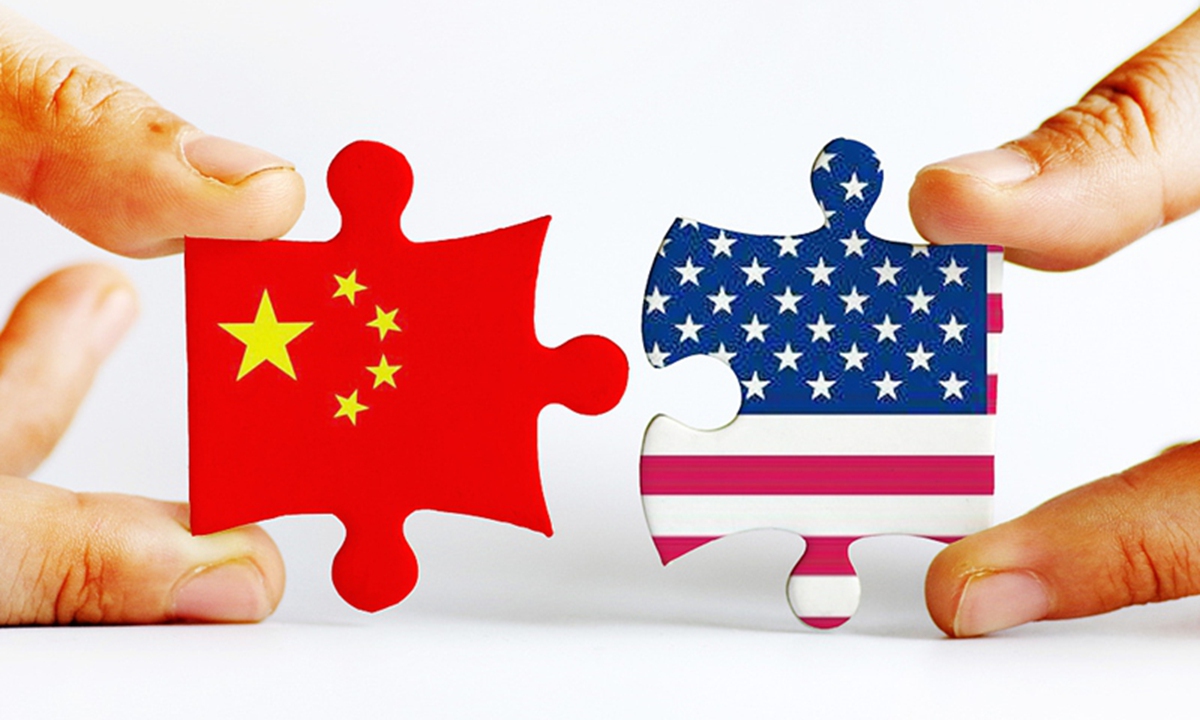
The proposed Office of Management and Budget (OMB) rule, set to take effect in December, would mark one of the biggest overhauls of US science funding in decades, giving political appointees greater authority over grant awards previously guided by scientific peer review and requiring that they "advance the President's policy priorities," according to the Washington Post.
It would also effectively expand the 2011 Wolf Amendment, which bars scientists from using NASA funding for bilateral collaborations with China, to all federal agencies and scientists receiving federal funds, marking the largest break in US-China scientific engagement in decades, the US media outlet reported.
So far, the proposed rule has garnered nearly half a million public comments, many from scientists and leading US science bodies. A Washington Post analysis of 50,000 of those comments found that around 88 percent were negative.
The rule, initially set to take effect in October, was pushed back to December after a bipartisan stopgap funding bill temporarily halted its adoption. Unlike the Wolf Amendment, the rule does not require congressional approval to take effect.
"I do think there are still members of Congress who think we have a monopoly on knowledge. They think we're still in the Cold War Soviet era ... where we were ahead in most areas of science and technology. That is not the case with China. We are no longer the leader in many areas of science," said Tobin Smith, senior vice president for government relations and public policy at the Association for American Universities, which advocates on behalf of leading US research universities, per the Washington Post.
Scientists warn that the rule risks subjecting long-term scientific research to four-year political cycles. "We will not succeed if with every new administration we are ping-ponging back and forth about priorities," the American Association for the Advancement of Science said in a blistering comment, urging the administration to withdraw the rule. "Fast-tracking such profound changes ... hands an easy victory to nations like China," it said, the Washington Post reported.
This reflects a fundamental divide between the US government and the scientific community over how science should develop, Wang Yiwei, a professor at Renmin University of China's School of International Studies, told the Global Times. He noted that politicians tend to believe that suppressing China as a competitor would allow the US to preserve its market dominance and technological edge.
Scientists, however, tend to follow a different logic, as scientific progress depends on openness, exchanges and collaboration. If science and technology are driven solely by competition and private capital, with the ultimate goal of maintaining technological monopolies, this could create greater risks and ultimately undermine US interests as well, Wang said.
The proposed rule change is the latest salvo in a broader battle in Washington over how to respond to China's rise as a scientific superpower. In July, the US National Science Foundation (NSF) also moved to ban collaborations between scientist it funds and many Chinese research institutions and their employees, according to Science magazine.
Liu Shaoshan, director of the Center for Embodied AI at the Shenzhen Institute of Artificial Intelligence and Robotics for Society and a former US-based researcher, told the Global Times in a previous interview that the NSF's new proposed rules created a "talent wall," arguing that restrictions based on nationality, institutional affiliation, and research partnerships could reduce the global talent pool available to the US, weaken its ability to attract leading scientists, and slow scientific innovation.
Liu also said scientific advancement relies not only on discovery but also on the exchange, validation, and dissemination of knowledge.
Wang also said China has built significant strengths through its vast pool of scientists and engineers, complete industrial chains and massive application scenarios, while increasingly moving from application-oriented innovation toward original research. Against this backdrop, US technological blockades and restrictions on cooperation are unlikely to halt China's progress, but could instead isolate American scientists from China's latest research and collaboration opportunities. Such an approach could also prevent the two countries from leveraging their respective strengths and ultimately undermine US competitiveness, Wang said.
。1月13日,中央电视台与中国移动、华为共同在广东深圳成功进行5G网络4K电视传输测试。这是我国第一个5G新媒体平台建设后的又一重大突破。那么,用5G网络在线观看4K视频是什么样的体验呢?在这方面,让我们来看看中央电视台新闻的解读。首先,对5G网络的速度进行了研究。

二 | 据央视解读,第五代移动通信技术标准的理论网络速率可达10GB/s(1.25GB/s),是家庭千兆宽带理论峰值速率的10倍(约1GB/s)。

三 | 然而,这个值只是理论峰值,实际使用率也受环境和设备的影响,将远远小于“理论峰值”。据央视数据,目前主流手机wifi连接理论峰值速率为150MB/s,家庭常用100M宽带理论峰值速率为100MB/s,4G网络理论峰值速率为100MB/s(TD-LTE)。也就是说,5G比4G快100倍,除了网络速度的提高,5G网络的延时也会降低,约为1ms,这是保证自动驾驶安全的主要前提条件;5G网络支持每平方公里同时连接上百万台设备,使物联网成为现实。

四 | 而智能家居则是一个现实;5G网络还支持连接速度高达500km/h的设备,这意味着即使在350km/h的高速铁路上,网络也将被连接起来。

五 | 你不能被困在这出戏里。为什么5G网络需要在线观看4K视频?为了提高分辨率,视频的总像素也将得到提高。4K视频将是1080p全高清视频总像素的四倍,视频量将更大。据央视数据,4K视频的需求率在40MB/s到60MB/s之间,虽然目前4G网络可以提供100MB/s的峰值速率,但实际使用率在8MB/s到60MB/s之间,不能满足4K视频观看的需求。升级到5G网络,个人最低速率要求提升到100MB/s,即使是最低速率,也能满足4K视频观看。

六 | 此外,5G网络还可以实现AR增强现实、虚拟现实和未来8K视频在线播放功能。
Current article:http://6uu.cousizhegaobaolengkuo.bond/iwy4/20260826/657.html
Published on:07:29:29


1
皮尔斯:把詹姆斯送出克利夫兰的感觉很好 他一直无法突破绿军2
这届网友开始自制羽绒服了 花一周时间自制高仿“大鹅”仅需339元?3
快聊财经事|一张电影票根能干啥?逛景区、享折扣、薅羊毛!4
安居鹭岛 智护颐养两相宜5
教育部最新通知!6
A股开盘:三大指数涨跌不一,超导、可控核聚变、生物制品等概念走强7
诺基亚将在加拿大投资3.4亿加元打造研发中心 聚焦5G技术8
江山代有才人出:杜兰特已经被NBA新赛季赛程抛弃9
ホテルスタッフが告白 チェックアウト時に“やってくれるとうれしいこと”に「これが理想」10
专家:詹姆斯能改变球票需求 76人的门票最抢手11
侨银股份董事郭倍华个人名下持股减少72万股,涉及金额730.08万元12
离开NBA!29岁火箭旧将正式加盟意大利豪门 结束7年NBA生涯13
SingCERT已接到至少33起勒索电邮举报14
iPhone 14 Plus渠道价已破发1700元 红色版最惨15
听证会上口出狂言 美国候任国防部长海格塞斯:我支持将哈马斯斩尽杀绝
- 随机推荐
1
UK Chancellor of Exchequer Kwarteng announces resignation2
吴柳芳一人撑起整个家:母亲患癌症+弟弟小10岁没工作 只能借贷维生3
怀旧经典,新游扎堆!暑期武侠MMO大乱斗!十一年老服焕新4
WordPress还是织梦?主流建站CMS系统对比选择5
India saved Sri Lanka: JVP6
5部门对美团、滴滴等保障新就业形态劳动者权益开展行政指导_平台_企业7
卡福评价内马尔:他是天赋异禀的球员,我们期待他早日痊愈8
秦皇岛经开区发展能级持续跃升9
500 Sri Lanka doctors migrate10
时政微观察丨从这些生动比喻感悟正确政绩观11
暴光小米Miui主题店开始推出现成的iOS主题12
敞开全球科创合作大门!2024中关村论坛来了13
拼多多发布Q2财报:“新十年高质量发展”迈向新阶段,长期主义驱动产业价值跃迁,拼多多发布Q2财报:“新十年高质量发展”迈向新阶段,长期主义驱动产业价值跃迁14
书法报书画天地·关注——徐勇民15
【早盘直通车】行情回顾及操作建议2026/8/26